Book recommendations

Controversial Topics

Sapiens

By Yuval Noah Harari

Sapiens. A book full of contradictions. Readable yet too long. Interesting, yet also boring. Razor sharp at times, but at other times subscribing to the same banal narrative.

Truth be told, I don’t have a straight recommendation for you. The Chronicle of Higher Education said of this book: “Reading Sapiens is like joining a wide-ranging and provocative dinner-table conversation. You may not agree with it all, but it makes for a memorable meal.” I have a love-hate relationship with the book, but to judge it fairly, we’ll pretend it’s a dinner-party conversation, with Harari as the intelligent guest who loves giving their opinion (Every party has one of those).

First, I love Sapiens because of its readability. Too many history books are boring, dense, and overstuffed with information, but that wasn’t an issue with Sapiens. Moving back to the comparison, the book reminded me of a conversation—intelligent, but never too hard for the reader to understand.

Not only that, but like any good discussion, it had some particularly insightful pockets. For example, Harari discusses the US Constitution in the book. The Constitution states that “All men are created equal.” The concept of “all men being equal” had been drilled into me at school, and, like all the kids in my class, I fervently believed it. But, Harari challenges, were all men created equal? Were all men created unequal (as ancient Babylonian society would have you believe)? No, says Harari. These were just creation myths to hold a particular society together, depending on how they chose to structure themselves. If you think about it, humans were just created. The concept of “equality” was dreamed up by our leaders.

“All men are created equal” is propaganda! I remember closing the book, because I couldn’t believe what I was reading. These are the best parts of any conversation. Somebody says something that makes us uncomfortable—but also makes us think.

But just because you love giving your discourses at a dinner party doesn’t mean all of them are necessarily correct or make sense. Herein lies Sapiens’s problem. A lot of the book is Harari sounding less like an intellectual and more like a disgruntled guest. It’s not anything new, though. Sapiens, in fact forms a predictable narrative.

Section one: We were happy hunter-gatherers, who, after hunting and gathering, hung out with each other near the fire. Life was great! Our bodies were perfectly adapted to this lifestyle, and we could have gone on living like this forever. What went wrong?

Section two: Whoops! What a bummer. We accidentally handed away our freedom to agriculture. Now we are forced to grow wheat in the blazing sun instead of frolicking through the forest like we used to. Not only that, but we can’t even enjoy the fruits of our labor. We have to hand them over to an evil emperor. Oh, the misery!

Section three: The Industrial Revolution rolls around, and with it, the state and the market (who Harari calls “the mother and father of the individual”) Enter the modern age, when the state and the market are great and we are all indulgent consumers.

As a fifth-grader, I thought this was groundbreaking. But after reading more, I now realize that this is an oversimplification. First of all, (as I will discuss in the Dawn of Everything recommendation) humans didn’t mechanically switch from being idyllic hunter-gatherers to miserable farmers. The reality, depending on region to region, is far more complex, with many different types of foraging societies. I’m not saying that Harari’s narrative isn’t true. Some part of it may well be. However, it seems to be more nuanced than what he suggests. Furthermore, towards the end of the book, Harari seems to be blaming the individual and sneaking in praises of capitalism and the government wherever he can.

Of course, this isn’t the entirety of the book. Sapiens has a number of ideas—about feminism, race, money, science, and a whole host of things. It’s definitely worth reading. But at its core, Sapiens is a jumble of interesting dinner-party ideas, some of which should be taken with a pinch (or perhaps a handful) of salt.
Cover of Sapiens

Guns, Germs, and Steel

By Jared Diamond

So, this book is essentially Sapiens’s grandfather (Harari himself credits Guns, Germs, and Steel for giving him the idea to write it) with the same Eurocentric approach to human history. Even though I haven’t read it, I do know there are some crucial differences. It won a Pulitzer Prize and is far more detailed than Sapiens.

I believe that both Sapiens and Guns, Germs, and Steel are good bases to start your history journey. But readers should also compare and challenge the ideas presented in these books—indeed, comparison is one of the best parts of history.

Cover of Guns, Germs, and Steel

The Shortest History series

By multiple authors

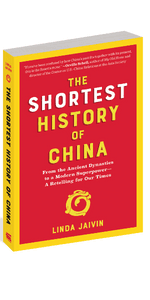
Finally, we are back to “regular history” so to speak. If you want to get an overview of the past of different countries (China, India, the US) this is an informative way to do so. What I also like about this series is that it keeps history relevant. I have read The Shortest History of China, and the author frequently places China’s history in context of where it is today (as an emerging global superpower). Not only that, but some of the books talk about pertinent topics today, such as AI and Israel and Palestine.

Cover of The Shortest History of China
My Favorite

Lies My Teacher Told Me

By James Loewen

With Florida declaring new standards for learning Black history (such as “slavery might have been good for slaves”) and Trump’s Americana military pageants, this book deserves a reread.

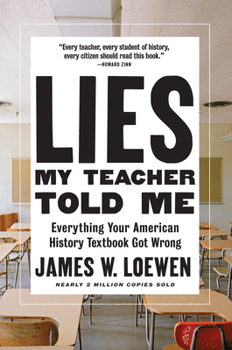
Lies My Teacher Told Me is essentially an “anti-textbook” that provides a fascinating view of US history, one that we are not often taught in school. Before reading this, I had heard about Helen Keller about a thousand times in school, yet I had no idea she was actually a socialist. I was taught about the Plymouth colony in my US history class, but I did not learn that European diseases wiped out 98 percent of the native population.

With insightful teachings (or re-teachings, if you are in middle and high school) about Indigenous people, the Vietnam War, recent history, the US government, and more, you should read this book to truly understand America beyond sanitized media portrayals and what you are told in school.

One last thing: Since Loewen first wrote this book in 1995, US history education has definitely improved, particularly in terms of racial and gender diversity in lessons. Since the 1995 and 2007 ones are a little outdated, so I would suggest reading the 2018 edition.

Cover of Lies My Teacher Told Me

How We Got To Now

By Steven Johnson

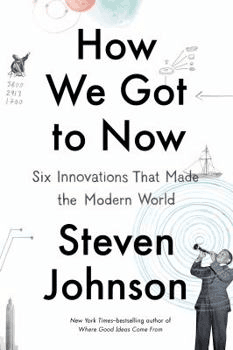
You may have heard of the “butterfly effect” where a butterfly flaps its wings and a hurricane starts a thousand miles away. But this book discusses the “hummingbird effect” where when a particular thing develops, a seemingly unrelated thing develops with it—and uses this logic to discuss some of humanity’s greatest inventions (for example, glasses and the printing press were created at the same time because reading made people realize they were farsighted).

I am using this book as one of the guides to help me research for NHD (because this year’s theme is Innovation in History) and I am excited to see where it takes me.

Cover of How We Got To Now

The Poison Squad

By Deborah Blum

Caution: This book is not for the faint of stomach.

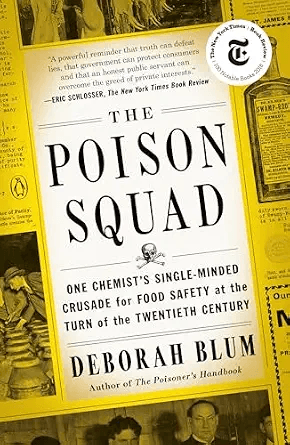
Honey used to be made of corn syrup, milk had formaldehyde (chemical used to preserve dead bodies) in it, and strawberry jam, despite the name, had no strawberries. This was the reality of food in the late 19th century—that is, until chemist Harvey Washington Wiley stepped in. Wiley was the chief chemist at the USDA, and The Poison Squad follows his journey as he exposed food adulteration and eventually created the FDA. The story touches on interesting, yet little-known historical events, such as the “embalmed beef” Spanish-American War scandal. In fact, I used it as a research source in my NHD project (For more about my projects, click on My NHD Experience).

The book is kind of unconventional and not what you would think of as a “history book” but definitely one I would recommend. Just a warning; you may want to keep a bag ready!

Cover of The Poison Squad

An Indigenous People’s History of the United States

By Roxanne Dunbar-Ortiz

Very similar to Lies My Teacher Told Me, except it’s for older readers and has won numerous awards (such as the American Book Award). I have just begun reading it, but it seems really solid and presents a host of sobering facts.

Cover of An Indigenous Peoples' History of the United States
Back to all book recommendations